Rachel / Belongings
Belongings Strategy
How memory items, saleable items, storage, cleanout, donation, disposal, heirs, vehicle decisions, and records stop blocking the house.
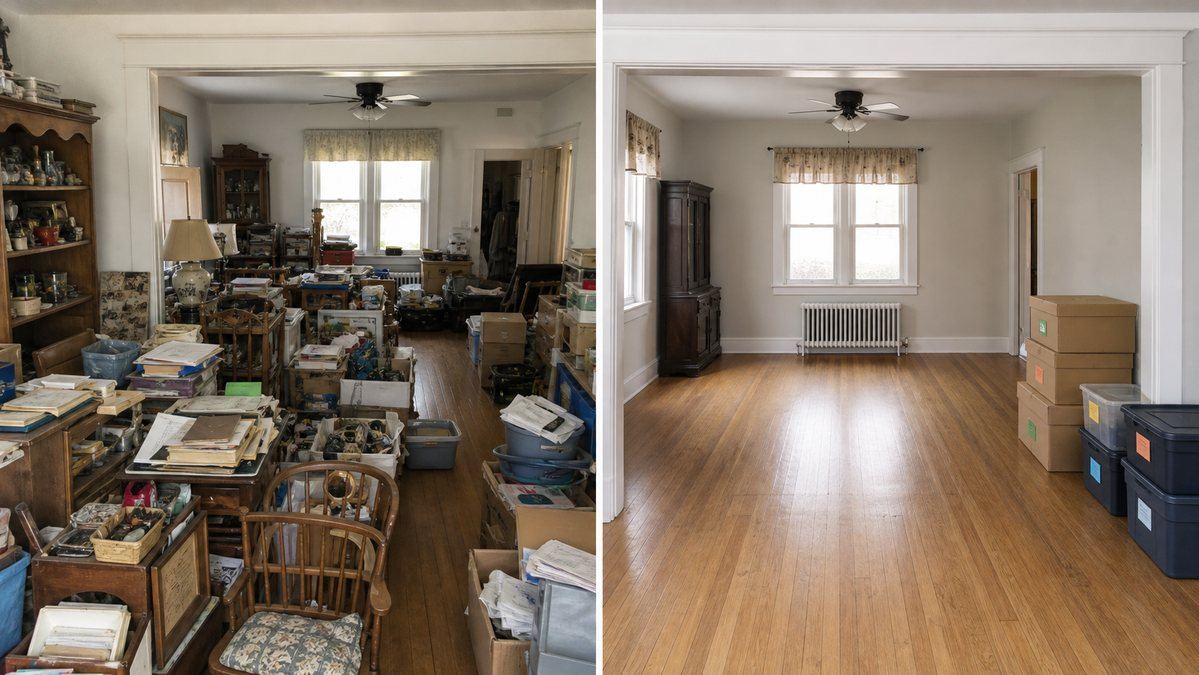
Route belongings into keep, store, sell, donate, discard, ship, return, vehicle, or research so the house can move without forcing every memory decision at once.
Transcript
Rachel's belongings plan separates memory from the house project. You do not have to decide a whole lifetime overnight. Some things may have value, like a vintage jukebox, Coke machine, stereo, tools, or a car. Some things cost more to move and store than they are worth. The first job is to route things so the house can move while important decisions remain visible and reversible where possible.
Vehicle sale and net-positive saleable items may offset cleanout, storage, handling, and records work.
Item route plan, value notes, sale/disposal checklist, and storage record.
Credit action for item batches or deeper researchWhat Legacy does
- Creates QR-tagged item records with photo, route, location, status, and notes.
- Coordinates storage, sale support, donation, disposal, shipping, heir distribution, and vehicle-sale support where the estate remains the seller.
- Researches likely net value before spending time on saleable items like a vintage jukebox, Coke machine, stereo, tools, or collectibles.
- Tracks costs, proceeds, and records so the executor can see what happened.
What you control
- Approve item routes and storage choices.
- Decide what gets sold, stored, shipped, donated, discarded, restored, returned, or held for heirs.
- Choose whether to request additional insurance or expert review.
How this module gets better
Room-by-room photos, sample items, obvious trash, potential value, memory boxes, and vehicle/title facts.
Executor storage, sale support, donation, disposal, shipping, return, vehicle, or expert research.
Approved costs, proceeds, storage status, and records.
Sources, confidence, and missing review
Item photos: Used for identification, routing, and sale/disposal records. Draft
Sold-data: eBay-style current/sold data placeholder where available. Needs source
Storage: Executor-controlled storage and optional insurance. Operational
Legacy is not an appraiser, auctioneer, or used-car dealer. Item values are estimates and depend on condition, market, fees, storage, handling, and time.
Ask Rachel
Route belongings into keep, store, sell, donate, discard, ship, return, vehicle, or research so the house can move without forcing every memory decision at once.
I would separate memory decisions from house progress. Keep uncertain items in executor-controlled storage, sell only when the net makes sense, and route everything with photos, QR tags, status, and records.